
The Statue of Liberty attracts over 4.5 million visitors each year, making it one of the most popular American attractions.
People are so fascinated by Lady Liberty that they hire tour guides to learn lesser-known secrets about its history.
However, there are some astonishing facts that even the most experienced of guides won’t be able to tell you.
In this article, we will unearth some interesting facts about the Statue of Liberty that will expand your understanding of this American icon.

1. The Statue of Liberty could have been in Egypt today!
The idea for a large statue by the French sculptor Frédéric-Auguste Bartholdi originated in a project in Egypt.
Inspired by the enormous stone figures that stood watch at Nubian tombs, Bartholdi had first envisioned a colossal woman holding a torch at the entrance of the Suez Canal.
The concept was even supposed to be named “Egypt Carrying the Light to Asia.” Yet, the plan never moved forward in Egypt.
Later, Bartholdi revised that initial concept and converted it into the Statue of Liberty that we are familiar with today, holding a torch in her right hand to symbolize enlightenment.
2. This French Gift was Transported in 300 Pieces
The Statue of Liberty was a gift given to the United States by France.
It was to be a tribute to the friendship between the two nations during the American Revolution and a commemoration of the 100th anniversary of American independence.
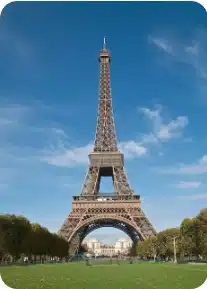
It was designed by the French sculptor Frédéric Auguste Bartholdi, while the internal structure was engineered by Gustave Eiffel—the same man who designed the Eiffel Tower.
When it was completed in France, the statue as a whole was disassembled into 300 sections, packed into 214 crates, and transported across the Atlantic to the United States.
After a difficult trip, the sections were reassembled on location, and the statue was formally dedicated on October 28, 1886, in New York Harbor.
3. The Statue of Liberty looks like Auguste’s mother
Of course, there are a plethora of fascinating Statue of Liberty facts out there, but this might just be the most surprising of all.
Some believe that Lady Liberty’s face was modeled after the mother of sculptor Frédéric-Auguste Bartholdi, Charlotte Bartholdi.
The idea is that Bartholdi used his mother’s strong, dignified features as a reference while shaping the statue’s expression.
While this is just a theory and cannot be fully proven, if it is true, he definitely set the bar high for “Son of the Year.”
4. The American citizens funded the Liberty’s Pedestal
Such a massive structure required an equally massive pedestal to hold it up.
Even though it was built in France, both countries agreed that the United States would take care of funding the pedestal.
However, when the U.S. government declined to pay for it, a large public fundraising effort began.
To hurry it along, newspaper publisher Joseph Pulitzer came up with an ingenious solution.
He promised to print the names of every contributor in his newspaper and give special recognition to the biggest donors.
Huge excitement was stirred, and in only a few months, over $100,000 had been raised from 160,000 donors—everyone from politicians to children to everyday workers.
5. It is made of copper, which turned Green over time
The Statue of Liberty is made mostly of copper, and copper has a funny habit—it slowly turns green as it ages.
When first assembled, the statue did not resemble what it is today; it had a bright, penny-like shine, almost a reddish-brown glow you’d catch right away.
Yet over time, the air, rain, and salty harbor water caused a reaction in the copper.
Gradually, it started to produce a soft, greenish layer known as patina on the surface.
It is that slow change that eventually gave the statue its famous green color.
So even though Lady Liberty wasn’t painted this way, she naturally turned green over time—almost like she aged into the look we now recognize instantly.
6. The Statue of Liberty Symbolizes Freedom and Purity
The Statue of Liberty is not just a huge figure standing on the waters, but everything about her—each part carries a symbolic meaning.
The Torch
This symbolizes enlightenment. It is supposed to light the way to freedom, reminding one that knowledge and understanding can lead humankind toward a better life.
The Book
She holds in her left hand a tablet inscribed with one essential date: July 4, 1776, the date of the signing of the Declaration of Independence. This piece represents law, justice, and the foundation of American democracy.
The Crown
It carries seven spikes that symbolize the seven continents and seven seas, depicting that the message of liberty is meant for the whole world.
Broken Shackles
You’ll notice chains broken at her feet. This is indicative of the breakdown of oppression and slavery, reflecting the promise of freedom to all by this statue.
7. The Statue of Liberty is a Roman goddess!
Did you know that the Statue of Liberty is actually based on the Roman goddess Libertas?
Libertas was the ancient Roman symbol of freedom and personal liberty.
The statue in New York was designed with her in mind, carrying the same message of freedom that Libertas had represented in Roman culture.
Long before the existence of Lady Liberty, Libertas even appeared on ancient Roman coins, especially after the assassination of Julius Caesar.
8. It was Once the Tallest Structure on Earth
When completed in 1886, the Statue of Liberty was not only a symbol of freedom but also the tallest iron structure in the world.
From the ground to the torch, it stood 305 feet high and towered above everything in New York City at that time.
Her 35-foot waist, size 879 shoes, and massive crown with 25 windows only magnified her presence.
You could even fit about 40 people inside her head and a dozen in the torch.
Of course, New York went on to build skyscrapers like the Empire State Building and the Edge NYC, which eventually overtook its height.
9. This Statue was a Lighthouse once
Surprisingly enough, from 1886 to 1902, the Statue of Liberty’s torch actually served as a real guide, helping ships and sailors navigate safely into New York Harbor.
The original idea was to light up her crown, too, but the brightness was so strong it might have blinded passing ships.
Interestingly enough, Lady Liberty became the first U.S. lighthouse powered by electricity from a steam plant.
Despite this, the torch didn’t have a proper lens to focus the light and, consequently, its use as a lighthouse was limited, stopping to guide ships in 1902.
10. The Lady Liberty was damaged during World War I
During World War I, the Statue of Liberty took a hit.
Explosives were set off at the munitions depot on Black Tom Island, near Jersey City, by German spies on July 30, 1916.
It was a mighty blast that shattered windows all the way to Times Square.
Even the statue’s arm and torch were damaged by flying debris, and the torch had to be closed to visitors for safety.
It was then repaired, and in 1984, the torch took on a new luster with a covering of 24-karat gold leaf.
This concludes our list of the top 10 astonishing facts about the Statue of Liberty.
Did you like this article? Did we miss something?
Please let us know in the comment section; we would love to hear from you.
If you plan on visiting this American icon any time soon, check out our article on 8 insider tips on visiting the Statue of Liberty.
Until next time, happy travels!

9 Responses
Great website. Plenty of useful info here. I am sending it to some friends ans also sharing in delicious. And naturally, thanks for your effort!
THank you brother
voa456
I’m not sure why but this website is loading very slow for me. Is anyone else having this issue or is it a problem on my end? I’ll check back later on and see if the problem still exists.
Howdy! I know this is kind of off topic but I was wondering which blog platform are you using for this site? I’m getting sick and tired of WordPress because I’ve had problems with hackers and I’m looking at options for another platform. I would be great if you could point me in the direction of a good platform.
Excellent weblog right here! Additionally your website quite a bit up fast! What host are you using? Can I get your affiliate hyperlink in your host? I wish my site loaded up as quickly as yours lol
I’m impressed, I have to say. Actually not often do I encounter a weblog that’s both educative and entertaining, and let me inform you, you have hit the nail on the head. Your thought is outstanding; the difficulty is something that not sufficient people are speaking intelligently about. I am very completely satisfied that I stumbled across this in my seek for one thing relating to this.
Thanks for sharing this! I honestly enjoyed how you covered “Top 10
Statue of Liberty Facts that will Take Your Breath Away – Our Travel Tickets” — you
don’t often find such a down-to-earth write-up. I’ve been digging into this topic as
well, and I put together a resource over here: Leonardo] Keep
it up!
My family always say that I am wasting my
time here at web, except I know I am getting know-how everyday by reading thes good posts.
xnxx